
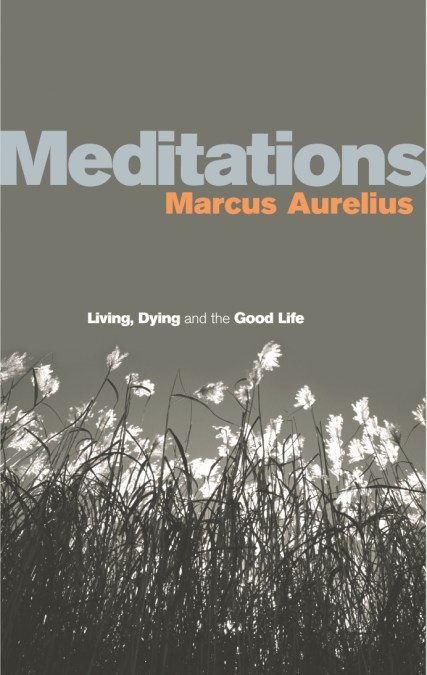
In my experience, few books have been as impactful and transcendental as this one. Marcus Aurelius’ Meditations has remained firmly beside desk since I first picked it up, and it continues to serve as a balm of wisdom and guidance throughout the vicissitudes of my life. If religion can be considered as a set of beliefs that guide our actions, then I would consider this a work of scripture. At its core, the lessons in this book may be few, but their value lies not simply in understanding. To fully internalise them bears repetition in both word and deed. That is precisely what this book provides. Where most books on philosophy begin with abstract theories and subsequently work towards practical situations (or sometimes not at all), Meditations does the exact opposite. Reflecting on real experiences, phenomena and observations of the people in his life, Marcus Aurelius grounds his thoughts deeply in the practical. Each one of his analogies and interpretations chips away at oft-held preconceptions and alludes to deeper meanings of virtue and eudaimonia.
I am willing to purchase and deliver you a copy of this book, should you wish to read it. I consider the monetary cost of this book inconsequential compared to the insight and wisdom it offers, and I truly believe that it is a far greater form of investment than any economic endeavour. All I ask for in return is honest intent. Send me an email at emmaneugene@outlook.com if you wish to take me up on this offer.
Outline
Since this book has no distinguishable outline, I will share some of my favourite quotes and paragraphs from each chapter:
Book 1
“Independence and unvarying reliability, and to pay attention to nothing, no matter how fleetingly, except the logos. And to be the same in all circumstances – intense pain, the loss of a child, chronic illness. And to see clearly, from his example, that a man can show both strength and flexibility”
“Not to shrug off a friend’s resentment – even unjustified resentment- but try to put things right.”
“Compassion. Unwavering adherence to decisions once he’d reached them. Indifference to superficial honours. Hard work. Persistence.”
“This, in particular: his willingness to yield the floor to experts – in oratory, law, psychology, whatever – and to support them energetically, so that each of them could fulfil his potential.”
Book 2
“When you wake up in the morning, tell yourself: The people I deal with today will be meddling, ungrateful, dishonest, jealous, and surly. They are like this because they can’t tell good from evil. But I have seen the beauty of good, and the ugliness of evil, and have recognised that the wrongdoer has a nature related to my own – not of the same blood or birth, but the same mind, and possessing a share of the divine. And so none of them can implicate me in ugliness. Nor can I feel angry at my relative, or hate him. We were born to work together like feet, hands, and eyes, like two rows of teeth, upper and lower. To obstruct each other is unnatural. To feel anger at someone, to turn your back on him: these are obstructions.”
“Do external things distract you? Then make time for yourself to learn something worthwhile; stop letting yourself be pulled in all directions. But make sure you guard against the other kind of confusion. People who labour all their lives but have no purpose to direct every thought and impulse towards are wasting their time – even when hard at work.”
“Remember two things:
i) that everything has always been the same, and keeps recurring, and it makes no difference whether you see the same things recur in a hundred years or two hundred, or in an infinite period;
ii) that the longest-lived and those who will die soonest lose the same thing. The present is all they can give up, since that is all you have, and what you do not have, you cannot lose”
Book 3
“If, at some point in your life, you should come across anything better than justice, honesty, self-control, courage – than a mind satisfied that it has succeeded in enabling you to act rationally, and satisfied to accept what’s beyond its control – if you find anything better than that, embrace it without reservations – it must be an extraordinary thing indeed – and enjoy it to the full.
But if nothing presents itself that’s superior to the spirit that lives within – the one that has subordinated individual desires to itself, that discriminates among impressions, that has broken free of physical temptations (as Socrates used to say), and subordinated itself to the gods, and looks out for human beings’ welfare – if you find that there’s nothing more important or valuable than that…
… then don’t make room for anything but it – for anything that might lead you astray, tempt you off the road, and leave you unable to devote yourself completely to achieving the goodness that is uniquely yours. It would be wrong for anything to stand between you and attaining goodness – as a rational being an a citizen. Anything at all: the applause of the crowd, high office, wealth, or self-indulgence. All of them might seem to be compatible with it – for a while. But suddenly they control us and sweep us away.
So make your choice, straightforwardly, once and for all, and stick to it. Choose what’s best.”
Book 4
“Our inward power, when it obeys nature, reacts to events by accommodating itself to what it faces – to what is possible. It needs no specific material. It pursues its own aims as circumstances allow; it turns obstacles into fuel. As a fire overwhelms what would have quenched a lamp. What’s thrown on top of the conflagration is absorbed, consumed by it – and makes it burn still higher”
“Beautiful things of any kind are beautiful in themselves and sufficient to themselves. Praise is extraneous. The object of praise remains what it was – no better and no worse. This applies, I think, even to ‘beautiful’ things in ordinary life – physical objects, artworks.
Does anything genuinely beautiful need supplementing? No more than justice does – or truth, or kindness, or humility. Are any of those improved by being praised? Or damaged by contempt? Is an emerald suddenly flawed if no one admires it? Or gold, or ivory, or purple? Lyres? Knives? Flowers? Bushes?”
“It can ruin your life only if it ruins your character. Otherwise it cannot harm you – inside or out.”
“‘If you seek tranquillity, do less.’ Or (more accurately), do what’s essential – what the logos of a social being requires and in the requisite way. Which brings a double satisfaction: to do less, better.
Because most of what we say and do is not essential. If you can eliminate it, you’ll have more time, and more tranquillity. Ask yourself at every moment, ‘Is this necessary?’
But we need to eliminate unnecessary assumptions as well. To eliminate the unnecessary actions that follow.”
“‘A little wisp of soul carrying a corpse’ – Epictetus”
Book 5
“Some people, when they do someone a favour, are always looking for a chance to call it in. And some aren’t but they’re still aware of it – still regard it as a debt. But others don’t even do that. They’re like a vine that produces grapes without looking for anything in return.
A horse at the end of a race…
A dog when the hunt is over…
A bee with its honey stored…
And a human being after helping others. They don’t make a fuss about it. They just go on to something else, as the vine looks forward to bearing fruit again in the season.
We should be like that. Acting almost unconsciously.”
“Just as you overhear people saying that ‘the doctor prescribed such-and-such for him’ (like riding, or cold baths, or walking barefoot…), say this: ‘Nature prescribed illness for him.’ Or blindness. Or the loss of a limb. Or whatever. There ‘prescribed’ means something like ‘ordered, so as to further his recovery’. And so too here. What happens to each of us is ordered. It furthers our destiny.”
“Another way to grasp what ordinary people mean by ‘goods’:
Suppose you took certain things as touchstones of goodness: prudence, self-control, justice and courage, say. If you understood ‘goods’ as meaning those, you wouldn’t be able to follow that line about ‘so many goods…’ It wouldn’t make any sense to you…
… Now go a step further. Ask yourself whether we should accept as goods – and should value – the things we have to think of to have the line make sense – the ones whose abundance leaves their owner with ‘…no place to shit.'”
“The mind adapts and converts to its own purposes the obstacle to our acting.
The impediment to action advances action.
What stands in the way becomes the way.”
“Keep in mind how fast things pass by and are gone – those that are now, and those to come. Existence flows past us like a river: the ‘what’ is in constant flux, the ‘why’ has a thousand variations. Nothing is stable, not even what’s right here. The infinity of past and future gapes before us – a chasm whose depths we cannot see.
So it would take an idiot to feel self-importance or distress. Or any indignation, either. As if the things that irritate us lasted.”
Book 6
“The best revenge is to not be like that.”
“It’s normal to feel pain in your hands and feet, is you’re using your feet as feet and your hands as hands. And for a human being to feel stress is normal – if he’s living a normal human life.
And if it’s normal, how can it be bad?”
“If you’ve seen the present then you’ve seen everything – as it’s been since the beginning, as it will be forever. The same substance, the same form. All of it.”
“When you need encouragement, think of the qualities the people around you have: this one’s energy, that one’s modesty, another’s generosity, and so on. Nothing is as encouraging as when virtues are visibly embodied in the people around us, when we’re practically showered with them.”
“Ambition means tying your well-being to what other people say or do.
Self-indulgence means tying it to the things that happen to you.
Sanity means tying it to your own actions.”
Book 7
“You cannot quench understanding unless you put out the insights that compose it. But you can rekindle those at will, like glowing coals.”
“What is rational in different beings is related, like the individual limbs of a single being, and meant to function as a unit.
This will be clearer to you if you remind yourself: I am a single limb (melos) or a larger body – a rational one.
Or you could say ‘a part’ (meros) – only a letter’s difference. But then you’re not really embracing other people. Helping them isn’t yet its own reward. You’re still seeing it only as The Right Thing To Do. You don’t yet realise who you’re really helping.”
“Frightened of change? But what can exist without it? What’s closer to nature’s heart? Can you take a hot bath and leave the firewood as it was? Eat food without transforming it? Can any vital process take place without something being changed?
Can’t you see? It’s just the same with you – and just as vital to nature.”
“When people injure you, ask yourself what good or harm they thought would come of it. If you understand that, you’ll feel sympathy rather than outrage or anger”
“But, my good friend, consider the possibility that nobility and virtue are not synonymous with the loss or preservation of one’s life. Is it not possible that a real man should forget about living a certain number of years, and should not cling to life … and turn his attention to how he can best live the life before him?”
“Take care that you don’t treat inhumanity as it treats human beings.”
Book 8
“This is what you deserve. You could be good today. But instead you choose tomorrow.”
“What I do? I attribute it to human beneficence. What is done to me? I accept it – and attribute it to the gods, and that source from which all things together flow.”
“To erase false perceptions, tell yourself: I have it in me to keep my soul from evil, lust and all confusion. To see things as they are and treat them as they deserve. Don’t overlook this innate ability.”
“To the best of my judgment, when I look at the human character I see no virtue placed there to counter justice. But I see one to counter pleasure: self-control.”
“Life me up and hurl me. Wherever you will. My spirit will be gracious to me there – gracious and satisfied – as long as its existence and actions match its nature.
Is there any reason why my soul should suffer and be degraded – miserable, tense, huddled, frightened? How could there be?”
Book 9
“Some things nature is indifferent to; if it privileged one over the other it would hardly have created both. And if we want to follow nature, to be of one mind with it, we need to share its indifference. To privilege pleasure over pain – life over death, fame over anonymity – is clearly blasphemous. Nature certainly doesn’t.”
“To do harm is to do yourself harm. To do an injustice is to do yourself an injustice – it degrades you. And you can also commit injustice by doing nothing.”
“When you run up against someone else’s shamelessness, ask yourself: Is a world without shamelessness possible?
No.
Then don’t ask the impossible. There have to be shameless people in the world. This is one of them.
The same for someone vicious or untrustworthy, or with any other defect. Remembering that the whole class has to exist will make you more tolerant of its members.
Another useful point to bear in mind: What qualities has nature given us to counter that defect? As an antidote to unkindness it gave us kindness. And other qualities to balance other flaws.”
Book 10
“Whether it’s atoms or nature, the first thing to be said is this: I am a part of a world controlled by nature. Secondly: that I have a relationship with other, similar parts. And with that in mind I have no right, as a part, to complain about what is assigned me by the whole. Because what benefits the whole can’t harm the parts, and the whole does nothing that doesn’t benefit it. That’s a trait shared by all natures, but the nature of the world is defined by a second characteristic as well: no outside force can compel it to cause itself harm.”
“When you wake up, ask yourself: Does it make any difference to you if other people blame you for doing what’s right?
It makes no difference.
Have you forgotten what the people who are so vociferous in praise or blame of others are like as they sleep and eat? Forgotten their behaviour, their fears, their desires, their thefts and depredations, not physical ones, but those committed by what should be highest in them?”
“Possibilities:
i) To keep on living (you should be used to it by now)
ii) To end it (it was your choice, after all)
iii) To die (having met your obligations)
Those are the only options. Reason for optimism.”
“When faced with people’s bad behaviour, turn around and ask when you have acted like that. When you saw money as good, or pleasure, or social position. Your anger will subside as soon as you recognise that they acted under compulsion (what else could they do?)
Or remove the compulsion, if you can.”
Book 11
“A branch cut away from the branch beside it is simultaneously cut away from the whole tree. So too a human being separated from another is cut loose from the whole community.
The branch is cut off by someone else. But people cut themselves off – through hatred, through rejection, and don’t realise that they’re cutting themselves off from the whole civic enterprise.”
“As you move forward in the logos, people will stand in your way. They can’t keep you from doing what’s healthy; don’t let them stop you from putting up with them either. Take care on both counts. Not just sound judgments, solid actions – tolerance as well, for those who try to obstruct us or give us trouble in other ways.
Because anger, too, is weakness, as much as breaking down and giving up the struggle. Both are deserters: the man who breaks and runs, and the one who lets himself be alienated from his fellow humans.”
“It’s the pursuit of these things, and your attempts to avoid them, that leave you in such turmoil. And yet they aren’t seeking you out; you are the one seeking them.
Suspend judgment about them. And at once they will lie still, and you will be freed from fleeing and pursuing.”
“They flatter one another out of contempt, and their desire to rule one another makes them bow and scrape.”
Book 12
“It never ceases to amaze me: we all love ourselves more than other people, but care more about their opinion than our own. If a god appeared to us – or a wise human being, even – and prohibited us from concealing our thoughts or imagining anything without immediately shouting it out, we wouldn’t make it through a single day. That’s how much we value other people’s opinions – instead of our own.”
“The gods are not to blame. They do nothing wrong, on purpose or by accident. Nor men either; they don’t do it on purpose. No one is to blame.”
“Three things, essential at all times:
i(a). your own actions; that they’re not arbitrary or different from what abstract justice would do.
i(b). external events: that they happen randomly or by design. You can’t complain about chance. You can’t argue with Providence.
ii. what all things are like, from the planting of the seed to the quickening of life, and from its quickening to its relinquishment. Where the parts came from and where they return to.
iii. that if you were suddenly lifted up and could see life and its variety from a vast height, and at the same time all the things around you, in the sky and beyond it, you’d see how pointless it is. And no matter how often you saw it, it would be the same: the same life forms, the same life span.”
 Emman's journal
I am glad for commenting to make you be aware of what a great discovery our child obtained visiting your web page. She came to understand a good number of issues, with the inclusion of how it is like to have a wonderful teaching nature to get many others really easily know just exactly a variety of problematic issues. You really exceeded our own desires. I appreciate you for offering the effective, healthy, educational as well as cool thoughts on your topic to Jane.
LikeLike
Wonderful article! We will be linking to this particularly great article on our site. Keep up the good writing.
LikeLike